%20rotate(45)'%3e%3cpath%20fill='%23B78437'%20d='%20M%200%200%20H%20113%20V%2061%20H%20140%20V%200%20H%20255%20V%20113%20H%20193%20V%20142%20H%20255%20V%20255%20H%20142%20V%20190%20H%20115%20V%20255%20H%200%20V%20141%20H%2063%20V%20113%20H%200%20Z'/%3e%3c!--%20Top%20/%20north%20ribbon%20--%3e%3cpath%20fill='%23FFFCF4'%20d='%20M%2023%2023%20H%2092%20V%20143%20H%2074%20V%2042%20H%2041%20V%2072%20H%2064%20V%2091%20H%2023%20Z'/%3e%3c!--%20Right%20/%20east%20ribbon%20--%3e%3cpath%20fill='%23FFFCF4'%20d='%20M%20164%2023%20H%20232%20V%2092%20H%20112%20V%2073%20H%20212%20V%2043%20H%20181%20V%2062%20H%20164%20Z'/%3e%3c!--%20Bottom%20/%20south%20ribbon%20--%3e%3cpath%20fill='%23FFFCF4'%20d='%20M%20162%20105%20H%20180%20V%20213%20H%20213%20V%20181%20H%20189%20V%20162%20H%20232%20V%20232%20H%20162%20Z'/%3e%3c!--%20Left%20/%20west%20ribbon%20--%3e%3cpath%20fill='%23FFFCF4'%20d='%20M%2025%20158%20H%20144%20V%20177%20H%2044%20V%20210%20H%2076%20V%20188%20H%2095%20V%20229%20H%2025%20Z'/%3e%3c!--%20Ether%20/%20unifying%20centre%20--%3e%3cpath%20fill='%23FFFCF4'%20d='M%20112%20109%20H%20145%20V%20143%20H%20112%20Z'/%3e%3c/g%3e%3c/svg%3e)
01
Structural
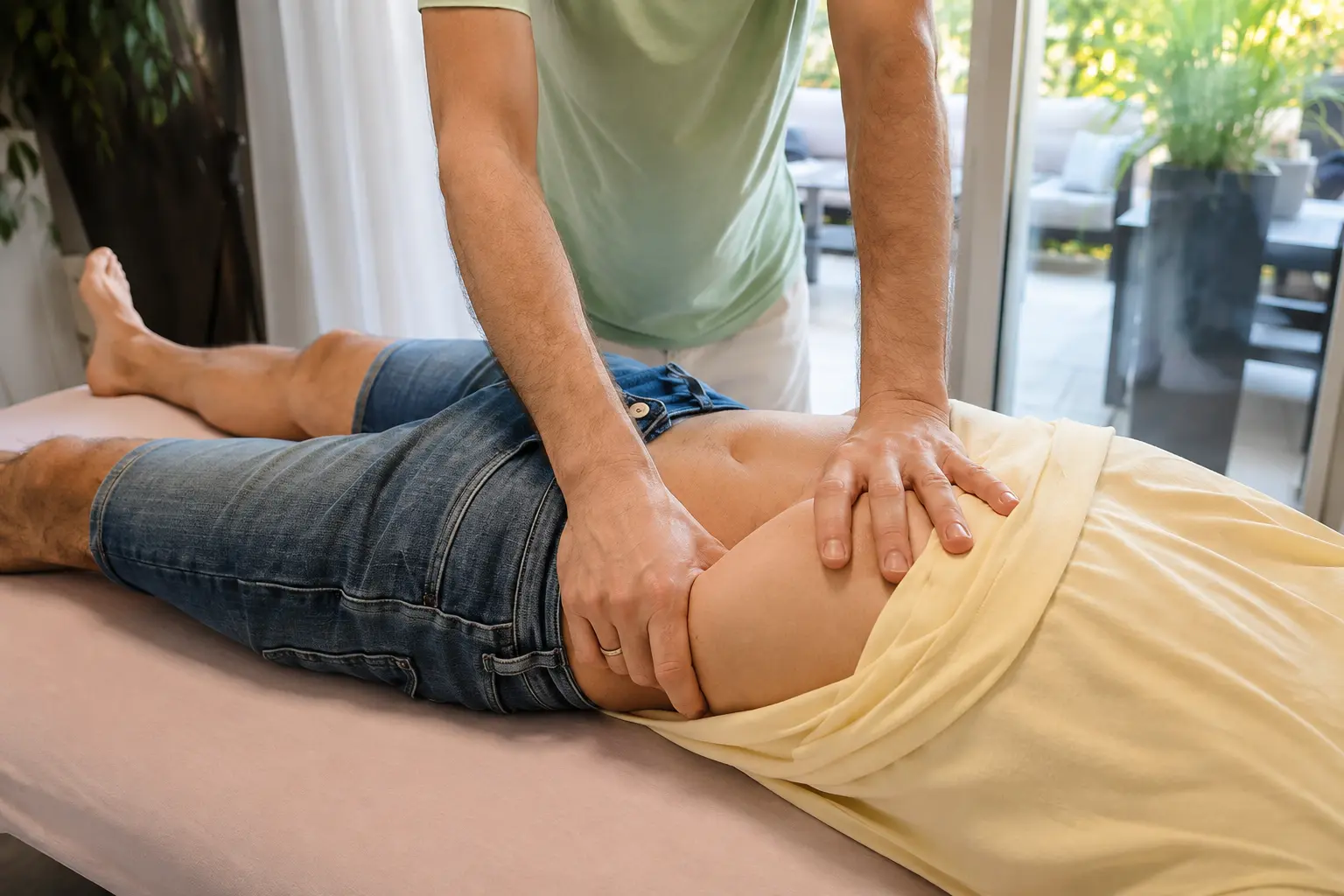
Assessment and treatment of the spine, joints, muscles and fascia: mobility, the distribution of tension, and patterns of strain in standing and in movement.
Osteopathy
My osteopathic assessment considers the spine, joints, muscles, fascia, internal organs and the functional relationships between them. Which aspects matter in treatment follows from the conversation and the findings, not from a fixed programme.
Health insurers & reimbursement
My osteopathic qualification has been individually reviewed by several German statutory health insurers. A number of insurers list me as an osteopath and provider of osteopathic treatment.
including AOK PLUS · TK · IKK classic · IKK gesund plus · Debeka BKK · SECURVITA · Salus BKK · SBK and others
Under certain conditions many health insurers contribute towards the cost of osteopathic treatment. The conditions and the amount reimbursed differ from insurer to insurer. Please check the current conditions directly with your health insurer before your appointment.
Assessment and treatment of the spine, joints, muscles and fascia: mobility, the distribution of tension, and patterns of strain in standing and in movement.
The internal organs are connected to the musculoskeletal system through connective tissue, the diaphragm and the pelvis. I assess their mobility with the rhythm of breathing and treat the surrounding structures with gentle pressure.
Very gentle work at the skull, spine and sacrum, often with the autonomic nervous system in mind. It suits people who respond sensitively to stronger techniques.
Perception-led work with subtle rhythmic movements and tissue tension. The hands stay largely still; the focus is on following the body's own regulatory processes.
The autonomic nervous system, stress, emotional strain and bodily experience are connected, and I take that into account. Physical complaints are not explained away as psychological.
I also treat pregnant women and children osteopathically. Assessment and treatment are adapted to age, the course of the pregnancy and the individual situation.
60 minutes · €120
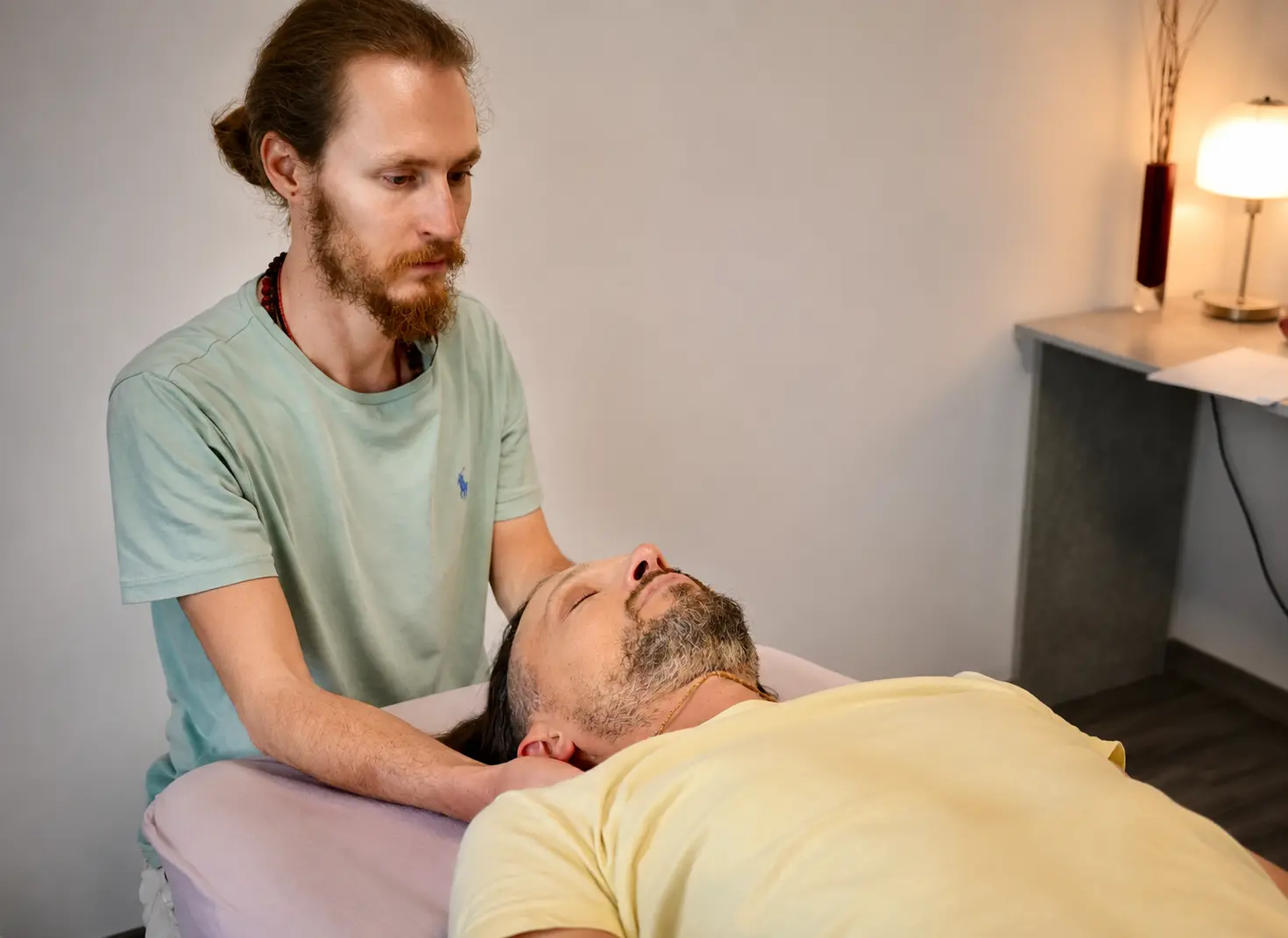
An osteopathic session usually lasts 60 minutes. Conversation, assessment and treatment flow into one another. Throughout the session I keep checking mobility, tissue tension and how the body responds, and adjust what I do accordingly.
By appointment only.
With acute, newly arisen or unexplained symptoms, a medical assessment may be advisable. Osteopathy can complement medical treatment, but it does not replace it where medical diagnosis or treatment is required.